A Slow Loris Design for Embroidered Apparel
When you're looking for a design to stitch for your small business, for a personalized gift, or for your own wardrobe, you need to think beyond the file preview. You have to imagine the thread, the fabric, and the person who will ultimately wear it. Today, I'm looking at T-shirt Design - Slow Loris on the Tree from that practical, stitch-by-stitch perspective.
The Quiet Charm of a Slow Loris
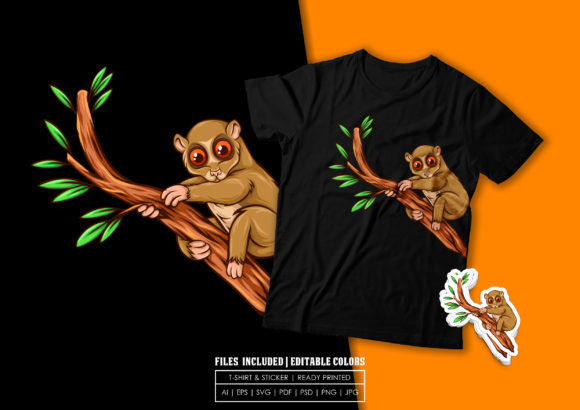
My first impression? This design has a gentle, whimsical personality. It's not loud or aggressive; it’s serene. The lorises clinging to the branches create a balanced, vertical layout that feels inherently wearable. The level of detail, built from vector shapes, suggests it can be adapted without losing clarity. This isn't a hyper-realistic wildlife portrait—it's a stylized, friendly illustration. That mood is perfect for products meant to feel cozy, personal, and approachable.
Where This Design Finds Its Home
Let's picture a real scenario. I'm preparing a custom embroidered sweatshirt for a client's birthday gift. They love unique animals and want something sweet but not childish. T-shirt Design - Slow Loris on the Tree immediately comes to mind. Its theme is specific enough to feel special, yet soft enough to appeal to a broad audience. It wouldn’t just work on a sweatshirt. I envision it beautifully on:
- A textured tote bag for a book lover.
- A soft cotton apron for a kitchen gardener.
- A delicate pillow cover in a nursery or cozy living space.
- A high-quality cap, positioned on the side panel.
- A baby's blanket or a simple kitchen towel as a heartfelt gift.
For an Etsy seller or craft fair vendor, this design offers versatility. You could create a whole line: the lorises on a sweatshirt, a matching patch, and perhaps a printed sticker using the same vector assets. That kind of consistency builds a recognizable brand for your handmade shop.
Considering the Stitch and the Surface
Being fully editable vector files (AI, EPS, SVG) is a significant advantage for embroidery. It means I can resize it confidently for different hoop sizes without worrying about pixelation. I can also easily change colors to match thread palettes or client requests. However, the real test comes in the embroidery machine.
The design’s success depends on how those 100 vector shapes translate into stitches. The intertwined branches and the lorises' detailed features could become areas of high stitch density. On a stretchy fabric like a standard t-shirt, or on a curved surface like a cap, that density needs careful management with the right stabilizer. I would always test this embroidery file on scrap fabric first, especially if I plan to use it on thin or textured materials.
Visual Appeal and Professional Impact
A clean, well-executed embroidery of this design elevates a product. On a premium sweatshirt, it feels boutique. On a tote, it looks thoughtfully handmade rather than mass-produced. This directly impacts customer trust and perceived value. For a gift, it’s the kind of image that sparks a smile—it’s engaging without being overwhelming. That giftability is a huge plus for creative entrepreneurs.
However, clarity is key. Some of the smaller elements, like the lorises' eyes or tiny branch details, must stitch cleanly to maintain the design's charm. On dark fabric, thread color contrast becomes crucial. I’d advise checking the design in black and white mockups to see if the shapes hold their form without color information. This step often reveals if a design is robust enough for embroidery.
Notes for a Practical Embroidery Designer
Before committing this to a final project, here’s my checklist:
- Test, Test, Test: Run it on your scrap fabric that mimics your final product fabric—be it fleece, canvas, or cotton.
- Hoop Size: Resize the vector appropriately. A very large version on a small item might lose detail; a very small version might turn dense areas into a solid, stiff block of stitches.
- Color Play: Use the editable colors to plan your thread palette. Sometimes the perfect digital color doesn't translate to an available thread.
- Commercial Use: The description states it's ready for printed apparel and such, but as a professional, I must confirm the licensing terms before selling any finished embroidered products or digital derivatives. Never assume.
- Context: Think about the end product's life. Will this embroidered apron be washed frequently? Will this baby item need to be ultra-soft? Adjust your stitch density and stabilizer choice accordingly.
A Design That Speaks Softly
In the end, T-shirt Design - Slow Loris on the Tree isn't a flashy, trend-driven graphic. It’s a stable, charming illustration with solid commercial potential precisely because of its calm personality. It fits into the Print Templates and Graphics category as a versatile asset, but its true value for makers is in its embroidered reality. When stitched with care on the right product, it tells a quiet story of craftsmanship and thoughtful design. That’s what turns a digital file into a beloved finished product.